What if Healing Feels Like Letting Your Family Down? The Hidden Guilt Women of Color Carry
You got the call on a Tuesday.
The job offer is official: a nice salary, benefits, and the kind of stability that would have been unimaginable to your younger self, who grew up watching your mother stretch every dollar.
It's yours. You should feel proud. A part of you does.
So why haven’t you been able to feel it fully?
As soon as the news settles, another feeling creeps in, one you didn’t expect but feels familiar. It’s not excitement, but guilt.
Because you want to call your mom, but you already sense the tears behind your eyes, knowing what it will feel like. It’s not that she won’t be happy for you. She will. She knows how much material security matters, and every step in that direction is worth celebrating. But she had to fight tooth and nail for hers, all while facing blatant discrimination, learning a new language, and building basic security from nothing.
This job represents a kind of stability she never had access to, no matter how hard she worked. And even though it’s moving you closer to your own dreams, it also feels like it’s pulling you further from your roots, your family, and the people you love the most – into a life they don’t fully understand.
“You’re just being dramatic. You’re crying over getting paid more. Just be grateful.”
So you push the feeling down, the way you’ve always pushed it down, and turn back to your desk to finish the workday.
You’ll tell your mom later.
The Guilt Women Of Color Don’t Talk About
One of the more persistent barriers to healing for women of color is the guilt of getting better.
It’s not always the cost of therapy, the scheduling, or even finding a good fit that holds you back from addressing trauma or anxiety. It's the quiet belief that choosing yourself — your success, your healing, your own life — is somehow a betrayal of the people who sacrificed so much for you.
The guilt doesn't announce itself loudly. It shows up right before you spend money on yourself, say no to your family, or ask for support.
It says,
→ "Your problems aren't serious enough.”
→ “Others have had it worse.”
→ “You should be able to figure this out on your own.”
And it didn’t come from nowhere.
The Love (and Pain) That Got Passed Down
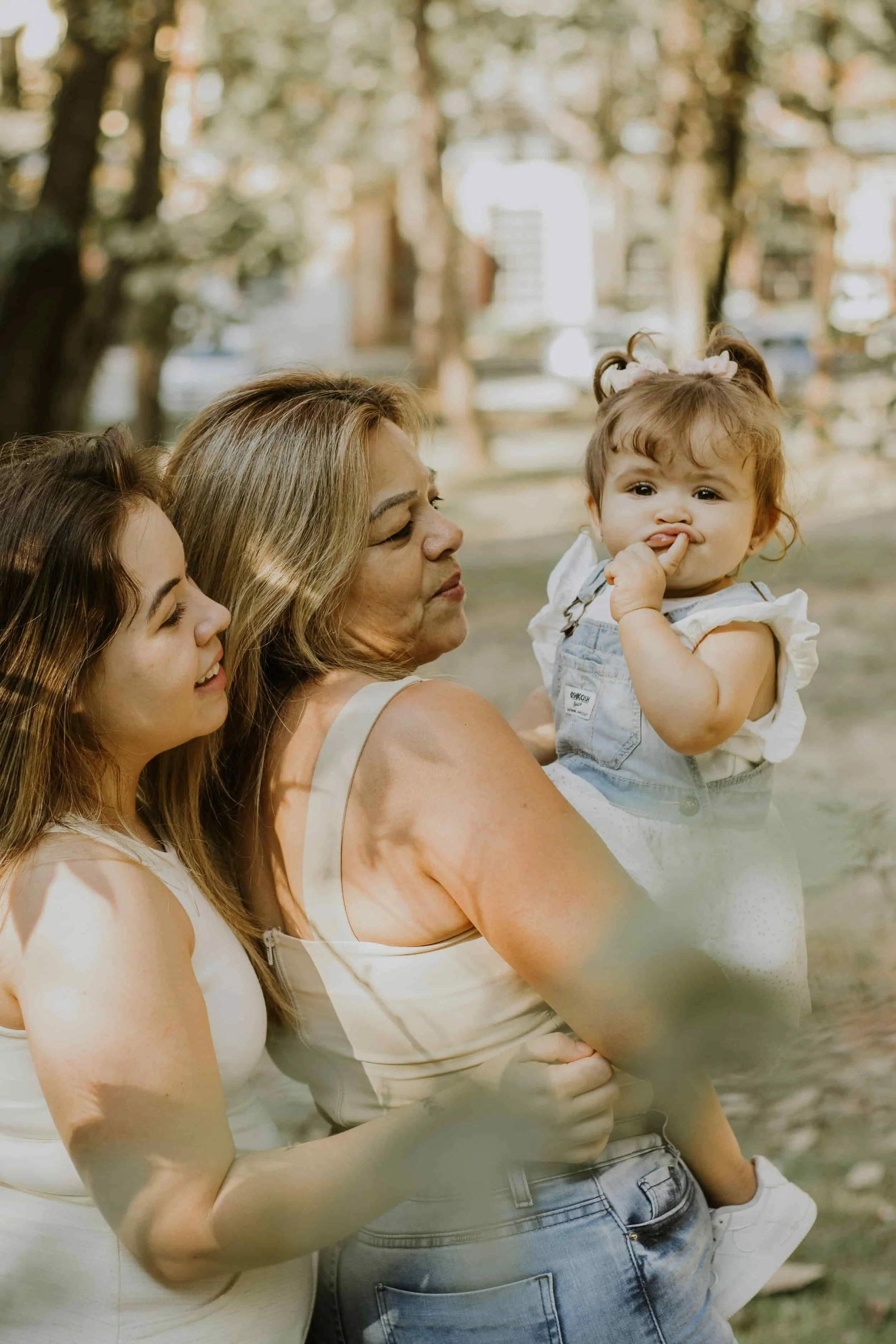
In many households, especially first-generation, immigrant, and Latinx families, endurance wasn't just expected. It was the highest form of love.
You watched your mother work double shifts without complaint. Your grandmother raised children through poverty, displacement, or circumstances she rarely spoke about. Your father took minimum wage jobs because his degree wasn't recognized here. Your grandfather fled war or government corruption in his homeland.
Their resilience was real, and it held your world together.
But what also got passed down, without anyone intending it, was a set of beliefs about what love and strength look like:
Naming your pain is indulgent.
Needing support is a weakness.
Your family is the only people who will truly look out for you.
Others have had it worse, so you should be able to manage.
By the time you're an adult — successful, capable, and holding a lot together yourself — these messages are so woven into you, they don't feel like beliefs anymore. They feel like who you are.
And in a way, it’s true. Because you are a culmination of your people's history, your parents' experiences, and everything they carried so you could be here.
You are proud of your lineage, heritage, and the ancestors’ strength that made your life possible.
Which is exactly why choosing something different can feel so…disorienting.
The Guilt Of Choosing Yourself
The guilt you feel when you choose to get support isn't a sign you're doing something wrong; it’s connected to something deeper and difficult to name.
The belief that your needs come last, that strength means endurance, and that you should be grateful rather than struggling are patterns you inherited, not ones you chose. Many of them formed early, in environments shaped by real instability, sacrifice, and systemic pressure.
And even if your upbringing felt relatively stable, racism, immigration stress, and intergenerational trauma may still live in your bones. These experiences shape the rules a family lives by, the way emotions are handled, and what it means to be strong.
For a long time, these rules probably served you — kept you moving, achieving, and holding things together when you faced struggle. But this pattern no longer works for the life you’re trying to build.
Recognizing that doesn’t mean you’re rejecting your family. It's taking an honest look at what they experienced and how things are different for you now.
Breaking The Cycle Doesn’t Mean Breaking Your Bond
One of the most common fears that surfaces, especially for high-functioning women of color who are deeply loyal to their families, is that healing will create distance.
Maybe you're already feeling it. You're home for a family dinner and realize mid-conversation that you're translating — not just language but entire worlds.
The way you think about your emotions, boundaries, and needs doesn’t even land in this room.
You love everyone at the table, yet feel completely alone.
This pain is very real, and it can quickly affirm the belief that healing is a betrayal of your roots.
But these two things often get mixed up: the distance that happens when you grow and the belief that your growth is the problem.
When that disconnect with your family shows up, it’s easy to assume you’ve done something wrong.
Healing doesn’t create this distance.
It reveals the gap that was already there: how you and your family relate to emotions, boundaries, and what it means to be strong.
The gap isn’t your fault. It’s the natural shift that happens as you take what they gave you and keep growing.
Therapy gives you the ability to move through this shift and stay connected to your roots without losing yourself in the process.
The people who raised you were doing the best they could inside systems that gave them very little – or nothing
Your healing doesn't contradict that. It builds on it.
You can be deeply rooted in your culture and still not pass the trauma forward.
You can love your mom and still see that her way of survival is not the only way available to you.
You can honor everything your family went through and still want more ease, joy, and peace for yourself.
That's exactly what their sacrifice was for.
You Can Be The One Who Breaks The Cycle
If guilt has been the thing standing between you and seeking support…
If you've been telling yourself your pain isn't bad enough…
If you feel like you should be able to figure this out on your own…

I want you to know: I heard that voice, too.
As a bicultural woman of color raised by an immigrant single mother, I've faced discrimination, generational trauma, and cultural mental health stigma firsthand. I know what it's like to navigate the pull between your roots and your own healing, wondering whether choosing yourself means losing your people.
Yet, therapy changed my life.
Now I'm dedicated to guiding others through that same threshold, especially women of color like you who have learned to believe that suffering is love and that healing is betrayal.
It's not, amiga.
Choosing therapy is not a rejection of your culture or an erasure of everything that shaped you.
It's a decision to heal. Not just for you, but for your people.
That choice is available because of everything they gave you, not in spite of it.
If you're ready to take that step, I'd love to help you hold the complicated feelings that come with it.
I promise, there is hope on the other side.